
Why Tooth Pain Gets Worse at Night
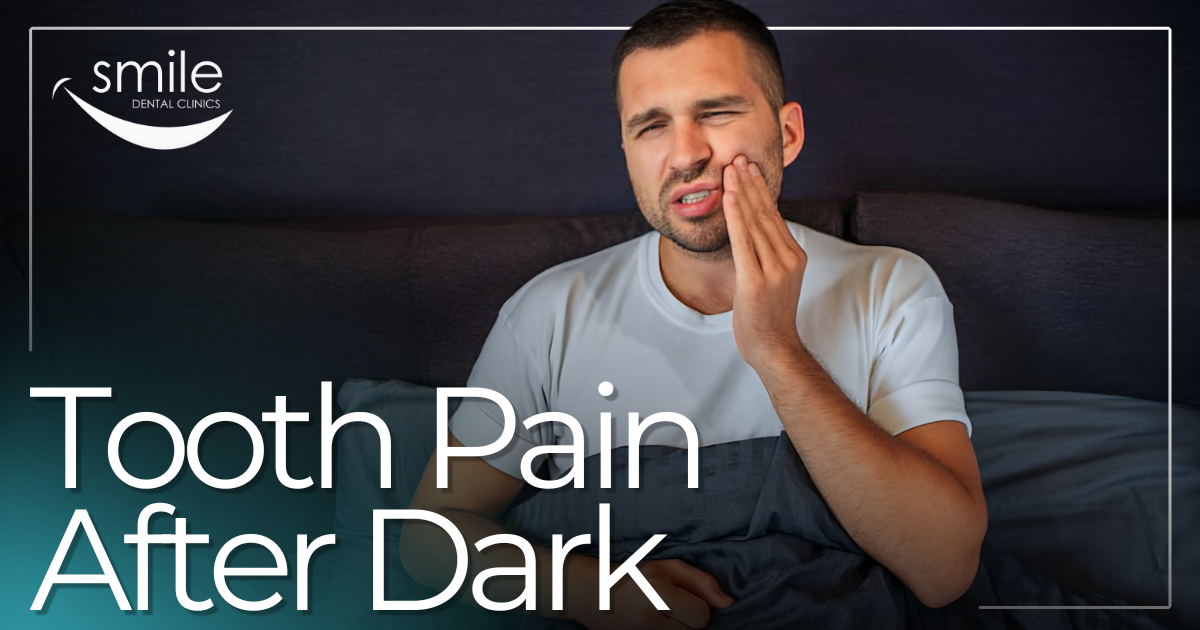
Most people have experienced tooth pain that’s manageable during the day but suddenly becomes impossible to ignore the moment they lie down. The house goes quiet, you close your eyes, and the pain that seemed tolerable a few hours ago is now all you can think about. It’s worth understanding why this happens because it often reveals something important about what’s going on inside the tooth. Read on to learn more.
The Physiological Reason Pain Gets Worse at Night
It’s tempting to chalk nighttime tooth pain up to the silence, fewer distractions, and more time to focus on discomfort. That’s part of it, but there’s something more happening. When you lie flat, blood flow to your head increases slightly. If there’s already inflammation inside a tooth, that subtle shift in circulation can intensify the pressure around an already irritated nerve. During the day, being upright helps distribute that pressure more evenly. At night, it has nowhere to go.
Why Tooth Pain Is so Disruptive
Unlike a swollen ankle or a sore muscle, the inside of a tooth is completely enclosed by hard structure. When inflammation develops in that space, the pressure has nowhere to expand. That’s why the pain can be throbbing, deep, or disproportionately intense. You’re not imagining it, and you’re not being dramatic. Your body is responding to a real problem in an extremely confined space — and at night, with nothing competing for your attention, that signal finally gets through.
What Pain Might Mean
Nighttime pain often suggests the problem has moved beyond ordinary sensitivity. When the pulp, the nerve, and the blood supply at the center of the tooth become inflamed or infected, pain can become spontaneous. It no longer needs a trigger, such as cold or biting pressure. It starts on its own and lingers.
A few signs that make nighttime tooth pain worth acting on quickly:
- Throbbing pain that wakes you up or prevents sleep
- Sensitivity to heat or cold that lingers after the source is removed
- Pain that spreads into the jaw, ear, or side of the head
- Tenderness when chewing or touching the tooth
- Any swelling in the gums or face
These signs don’t automatically confirm which treatment is needed, but they do indicate the tooth merits an urgent examination.
Night Pain Is Information, Not Just Inconvenience
Pain is your tooth communicating before the situation gets worse. It’s giving you a window to act while the tooth may still be easier to treat and save. Rarely does this kind of internal irritation resolve on its own. Waiting for the pain to become unbearable, or hoping it passes, usually means the problem has more time to progress. The earlier we can evaluate what’s happening, the more options we have and the simpler the treatment tends to be.
If your tooth pain consistently worsens at night, that’s not something to sleep through and reassess in a few days. It’s a clear signal that something inside the tooth needs attention. Let’s find out what your tooth is telling you before it gets worse. We can help you rebuild your smile. Contact us today at our office located in Phoenix, AZ.